
How to Paint a Garage Door
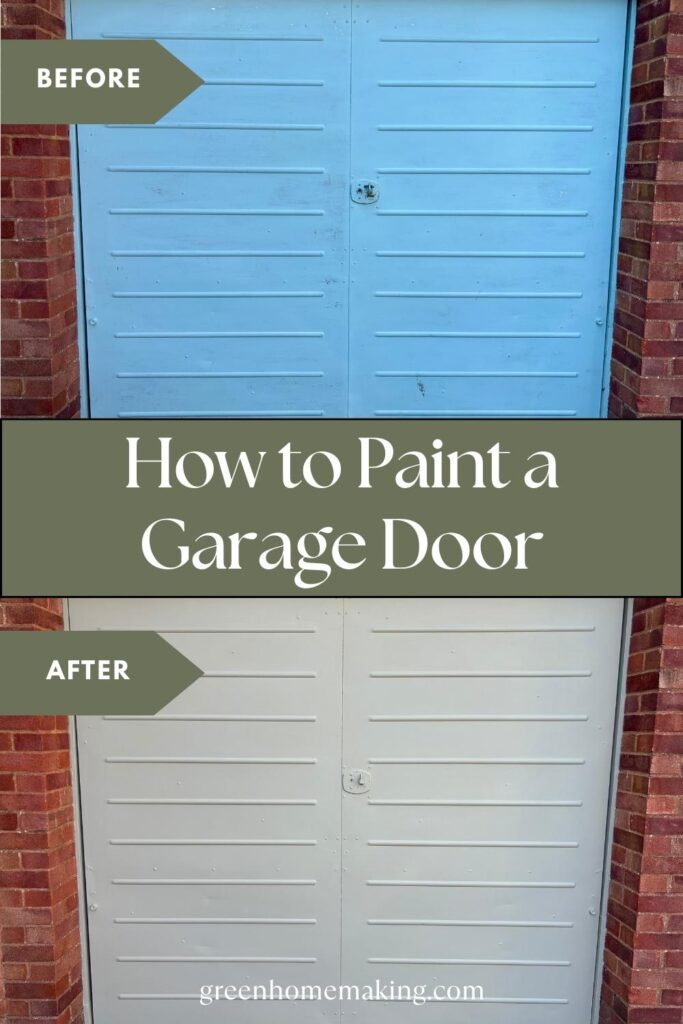
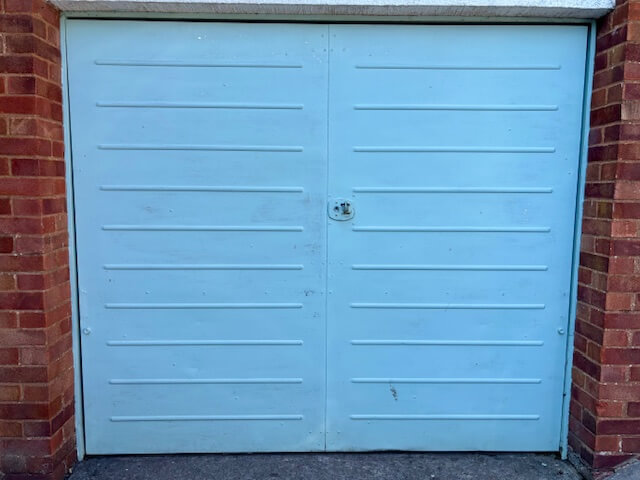
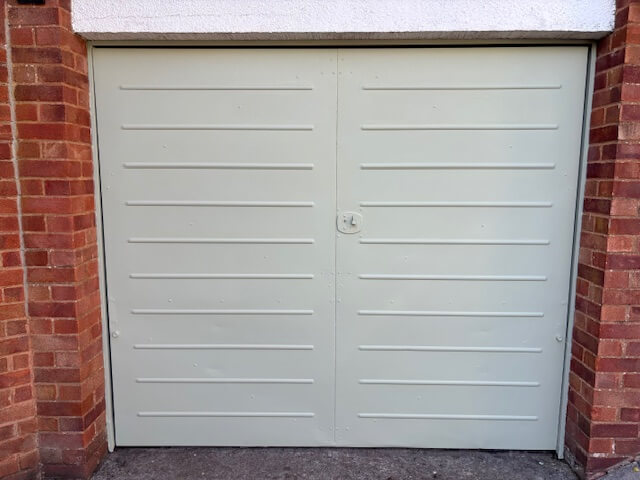
This is a step by step guide on how to paint a garage door. I painted my metal garage door using Frenchic Paint in the colour ‘Wise Old Sage’. Frenchic Al Fresco paint can also be used on plastic, uPVC and wooden surfaces.
You can have a freshly painted garage door complete within a day, providing you time it right with the weather. Painting your garage door is a great way to increase your curve appeal and much more cost effective than buying a whole new garage door.
This post contains affiliate links. As an Amazon Associate I earn from qualifying purchases. There is no extra cost to you. Thank you.
Benefits of using Frenchic Paint for DIY projects
- No need to use a primer
- Two coats of paint is usually sufficient
- It’s reasonably priced and one tin of paint goes a long way
- It can be applied on to a number of different surfaces
- Lovely range of colours to choose from
Where to buy Frenchic Paint
Frenchic paint is a British brand that has over 500 stockists throughout the UK, Europe, North America and Australia. Visit the Frenchic website to find your nearest independent retailer, who will hopefully be able to ship to your location.
For this project I have used Frenchic Al Fresco paint, which is suitable for outdoor projects. The colour is called ‘Wise Old Sage’, which is a lovely greeny grey. I have also used it when upcycling old pieces of indoor furniture.
Frenchic also has a range of chalk wall paint and specialist furniture paint.
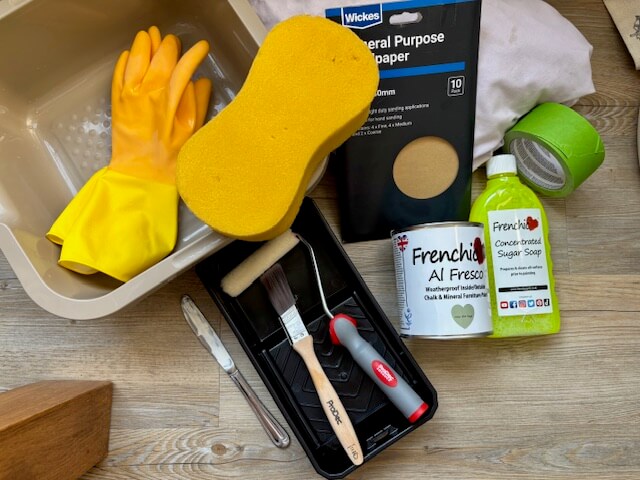
Tools and materials needed to paint your garage door
- Sandpaper
- Sugar soap
- Washing up bowl (or other large bowl)
- Sponge
- Rubber gloves
- Masking tape
- Paint
- Paint brush (I like ones with angled heads)
- Small paint roller and tray
- Knife or alternative tool to lift the lid of the paint tin
- Old bed sheet or a plastic dust sheet to protect surfaces
How to Paint a Garage Door
Step 1
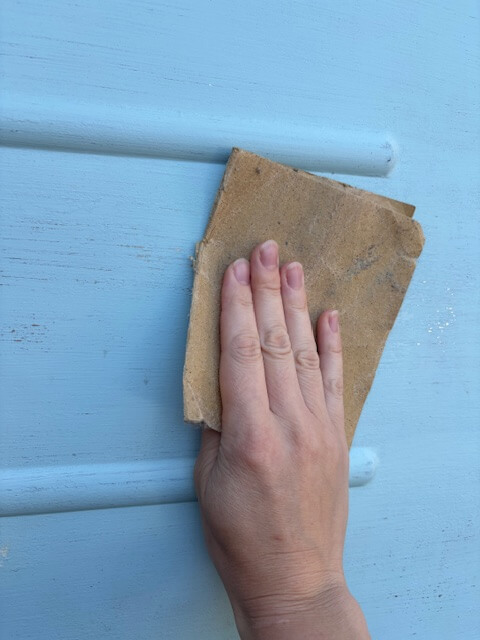
Lightly sand your garage door using sandpaper to key the surface, so that the paint has something to hold on to. I used medium grit sandpaper for this project.
The sandpaper will also help to remove any flaky bits of paint, if your door has been painted previously.
Step 2
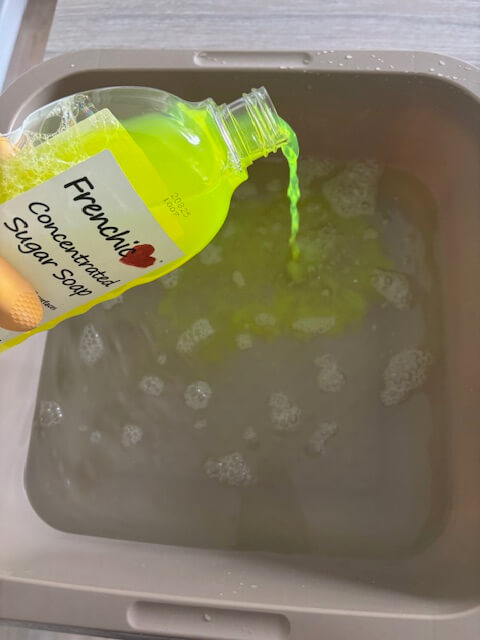
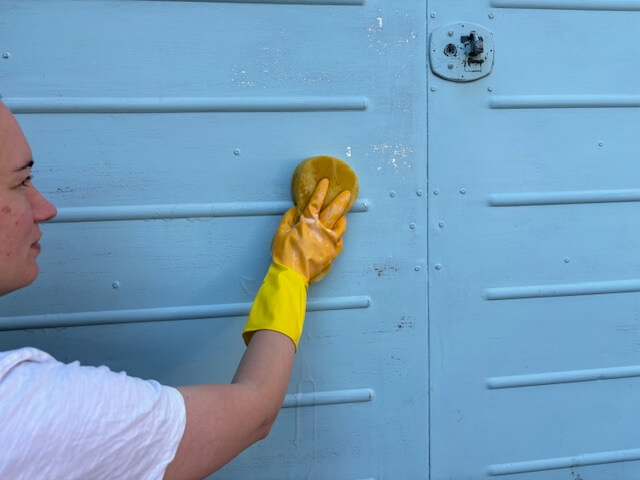
Clean the surface of your door using sugar soap diluted in hot water. Follow the instructions on the bottle of the sugar soap, which will give you the measurements of how much sugar soap and water to use.
The sugar soap will help to remove any dirt and grease from your door and give you a nice clean surface to work with. I would recommend wearing rubber gloves when using the sugar soap.
Step 3
Use masking tape to protect any hardware on your door (handles or key holes) that you don’t want to get paint on.
You can also use masking tape around the edges of the door frame to avoid getting paint on the surrounding surfaces.
I didn’t bother with this step as I wanted to paint over the handle and key hole.
Step 4
Lay an old bed sheet or large plastic covering down to protect the ground from any splashes of paint.
Step 5
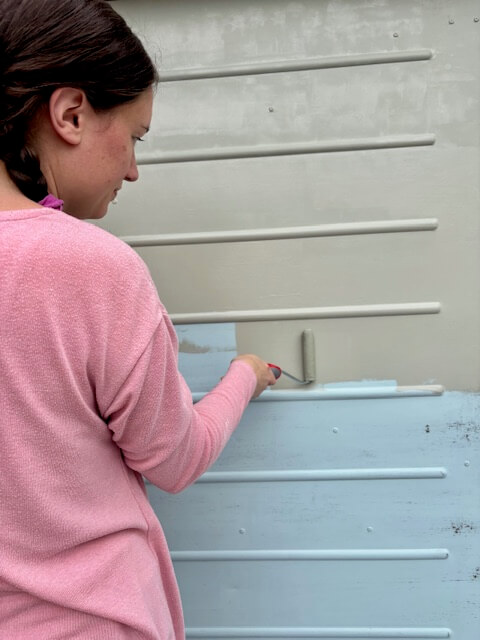
Start painting the first coat. Start at the top of the door and work your way down.
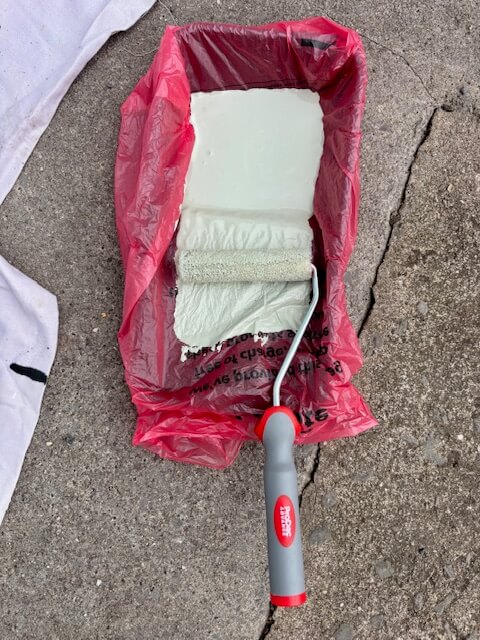
I recommend applying the paint using a small paint roller, as it is much quicker than using a paint brush.
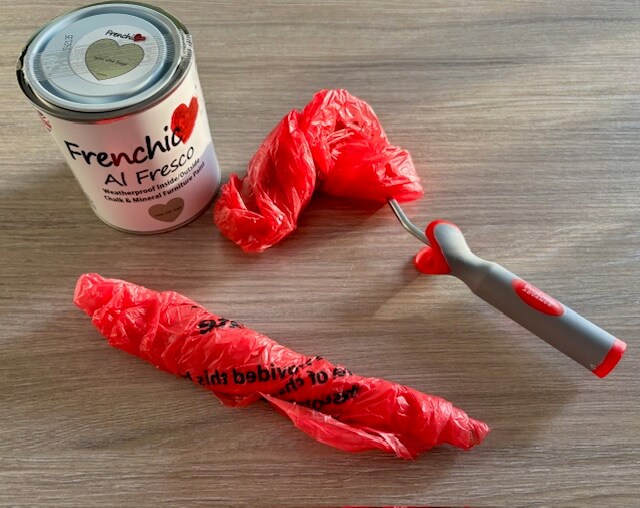
Use a plastic bag to line the tray, to avoid having to wash the tray afterwards and have the paint enter the waterways.
Roll the paint on in a horizontal direction when painting the width of the door (when moving from left to right).
Step 6
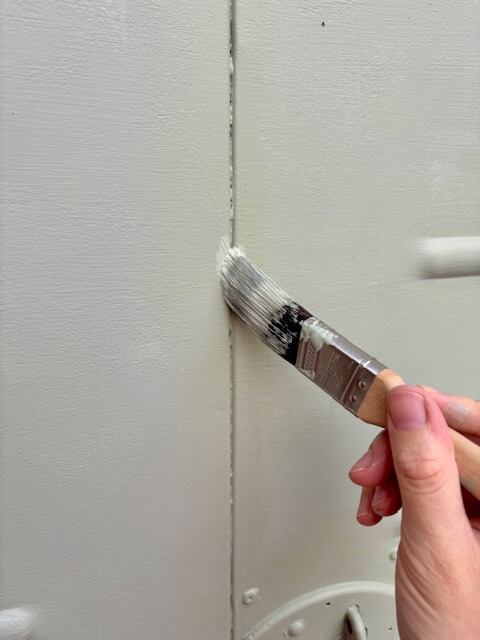
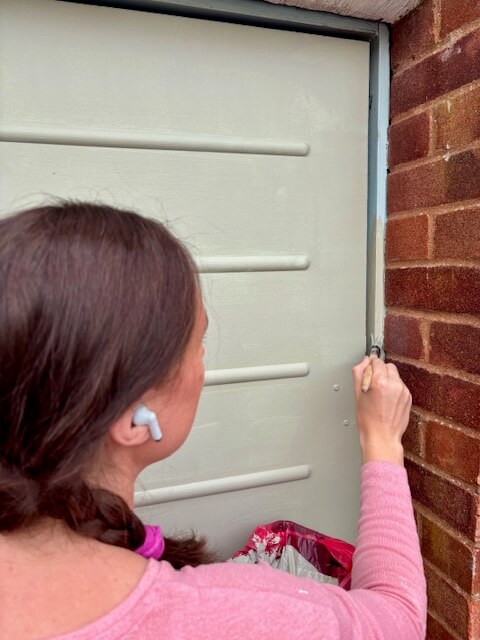
Use a paint brush to apply the paint around the edges of the door, any grooves and around the hardware.
Apply the paint to the surrounding door frame as well, if you wish.
Step 7
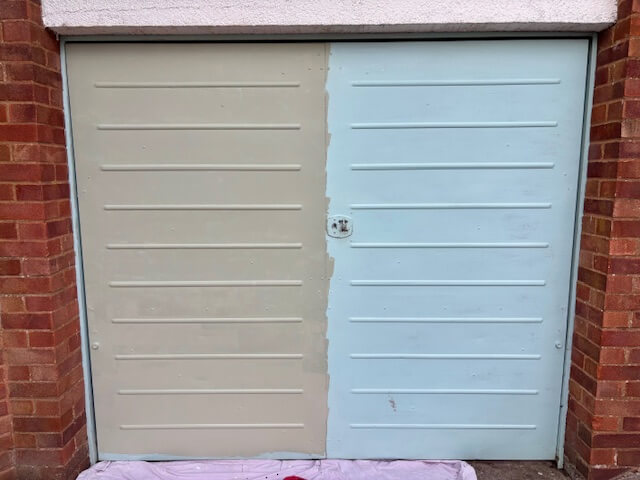
Once you have applied the first coat of paint, allow approximately 2 hours for it to dry. Drying time will depend on weather conditions though.
I don’t wash my paint brushes in between applying the first and second coats of paint. Instead, I wrap the brush head and roller tightly in plastic bags, to keep them from drying out in between coats.
Step 8
Once the first coat of paint has had enough time to dry properly, start applying the second coat of paint.
I find two coats of paint usually provides a good enough finish, but depending on your project you may feel like you need to apply a third coat.
Once you are happy with the coverage you can remove the masking tape from any hardware and/or surrounding surfaces.
Check to make sure that the masking tape hasn’t left any gaps in the paintwork and touch up any areas that may have been missed.
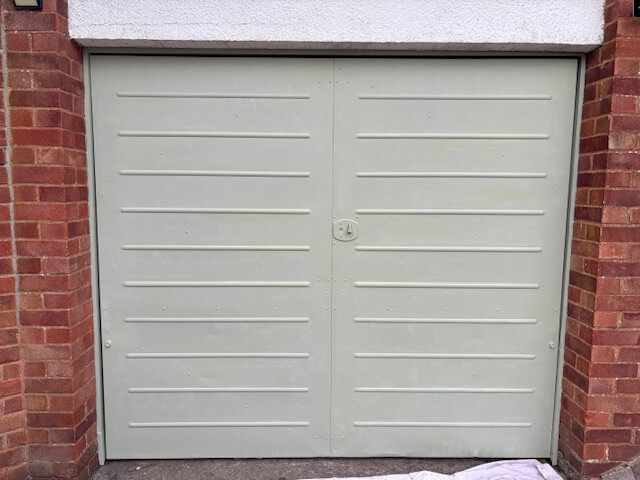
Now it’s time to stand back and admire your handy work!
Additional Tips
Check the weather forecast: Ideally you want to be painting on day when no rain is forecast for the next 48 hours and the temperature is between 10-32 degrees Celsius (50-90 degrees Fahrenheit).
Start early in the day: You will need to leave about 2 hours drying time in between painting the first and second coats. Each coat took me about an hour to apply. It is therefore best to start relatively early, if you want to complete this painting project in one day.
I really hope you’ve found this post helpful. If so, please consider PINNING FOR LATER.
Thank you so much for stopping by!


2 Comments